Describe the home
Type, age, size, heating and what is already installed.
About 90 secondsTurn five simple answers into a practical home energy plan—with honest cost ranges, likely savings and the right order of work.
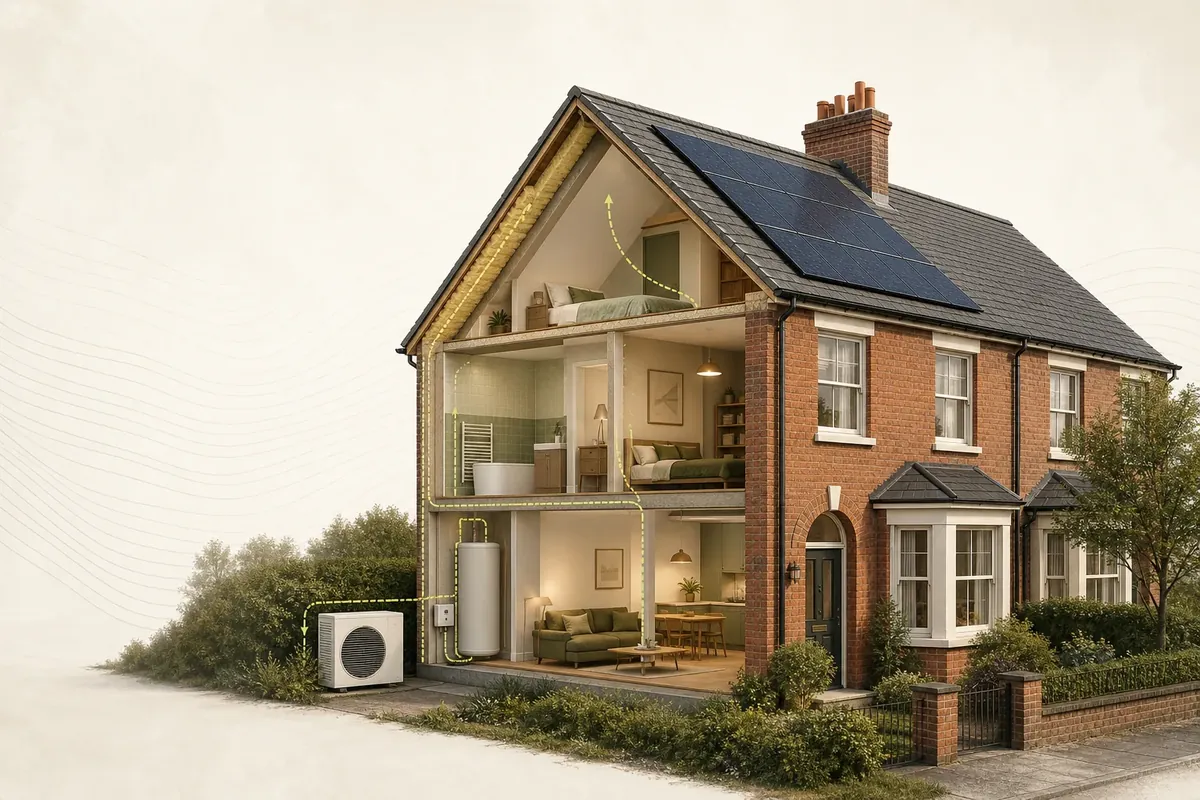
Roof, fabric, heating, hot water and electricity affect one another. Hearthline helps you see the whole system before buying one part.
Explore the planning guides →Hearthline looks at the building as a system, then ranks the work by urgency, fit and likely value.
Type, age, size, heating and what is already installed.
About 90 secondsSwitch between conservative, typical and optimistic scenarios.
No false precisionSave the plan, check grants and compare like-for-like quotes.
You stay in controlQuick wins, fabric upgrades and clean technology are sequenced so one project prepares the home for the next.
Conservative, typical and optimistic—because weather and behaviour change real outcomes.
Nation and heating type shape what may be available.
Carry a practical checklist into every installer conversation.
Start without an account, keep useful results in My Hearthline, then unlock multi-quote and project controls only when you need them.
Use every calculator, grant route and first quote check without handing your details to an installer.
Build my free plan →Save a home profile, plans, checks and practical actions. Account creation remains optional.
Open my workspace →Normalise up to four quotes, expose missing evidence and keep the decision through handover.
See founding access →Put one solar proposal on a consistent basis, see the assumptions and evidence it does not contain, and turn the gaps into a written installer email.
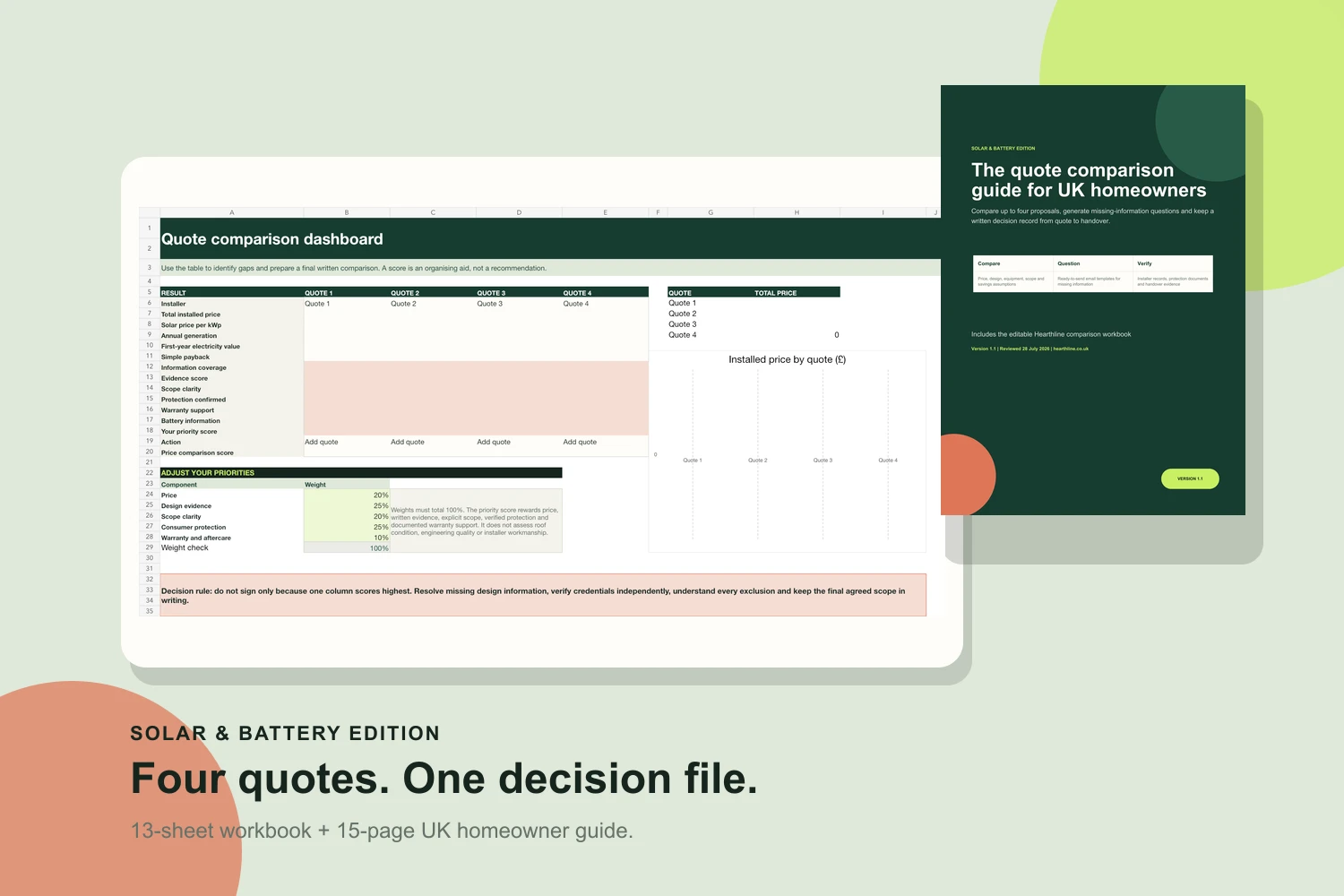 Prefer files? Quote Pack · £19 once
See how the order changes with the building. These examples use current published benchmarks—not promises.
Hearthline is funded by its own optional paid tools. The free planner remains useful on its own, and product sales never change which improvements appear first.
Read the full methodology ↗Use our current defaults or replace every tariff and consumption figure with your own.
Real homes, quotes and behaviour vary. We show uncertainty instead of hiding it.
Recommendations are calculated independently. Paid Hearthline products are offered only where they match the next decision.
Tariffs and schemes are checked every quarter; core cost benchmarks every six months.
Direct answers, comparison tables and source-backed checklists for choosing the work and testing installer quotes.
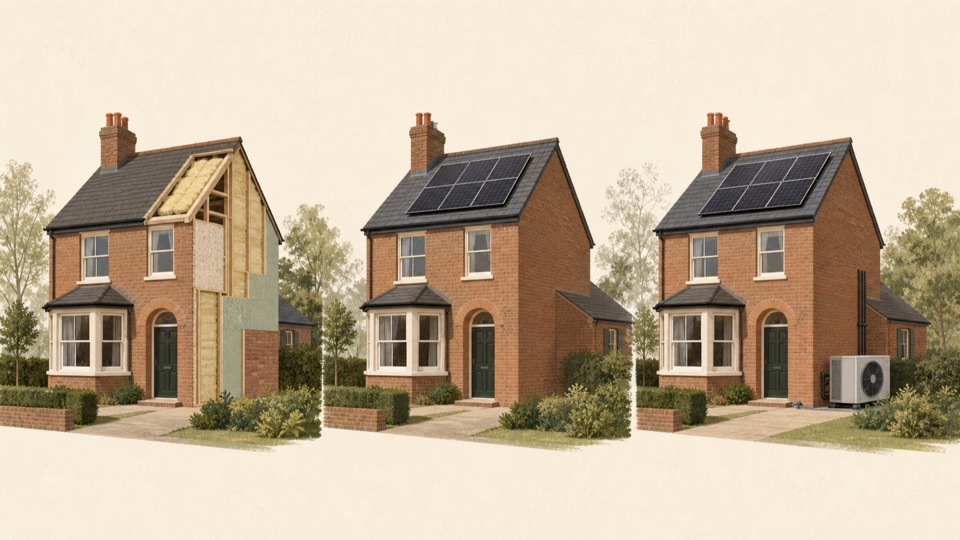 WHOLE-HOME ORDER
Sequence defects, controls, insulation, solar and clean heating without creating expensive conflicts.
Read the guide →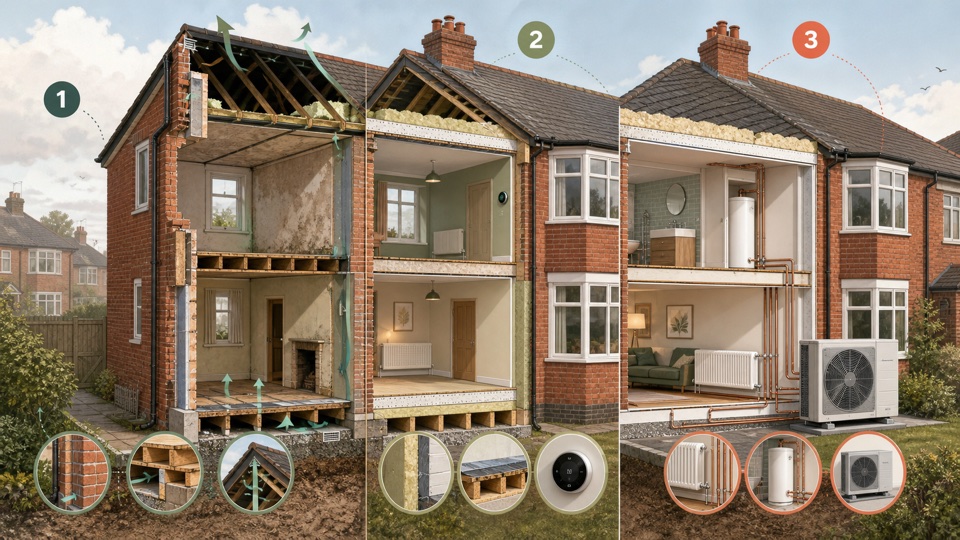 PROPERTY-SPECIFIC ROUTE
Check cavity walls, suspended floors, loft ventilation and boiler timing.
Build the three-stage route →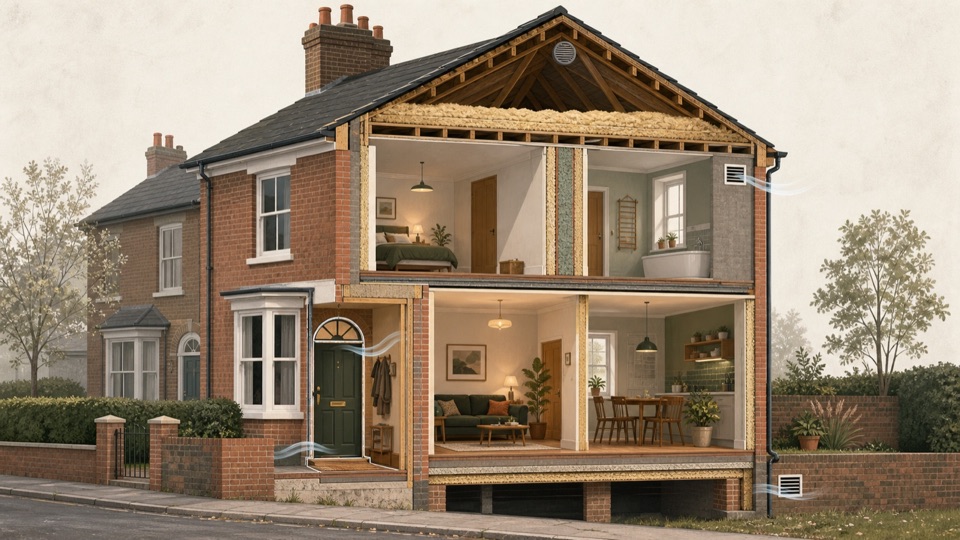 COMPARE ROUTES
Choose from the home’s real constraint, renovation trigger and energy use.
Compare them →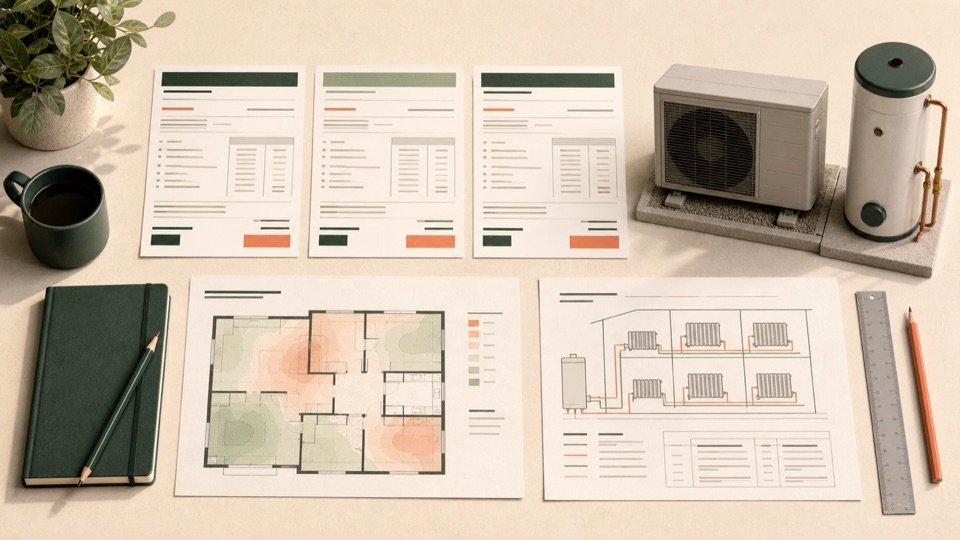 QUOTE CHECKLIST
Check heat loss, flow temperature, emitters, hot water and scope.
Check a quote →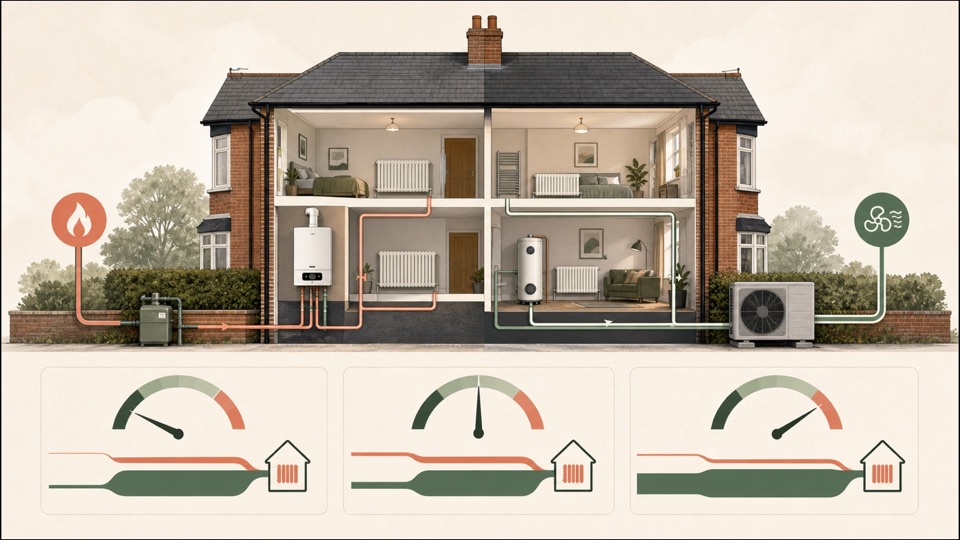 FREE CALCULATOR
Use your tariff and the proposed seasonal performance to find the break-even point.
Compare running costs →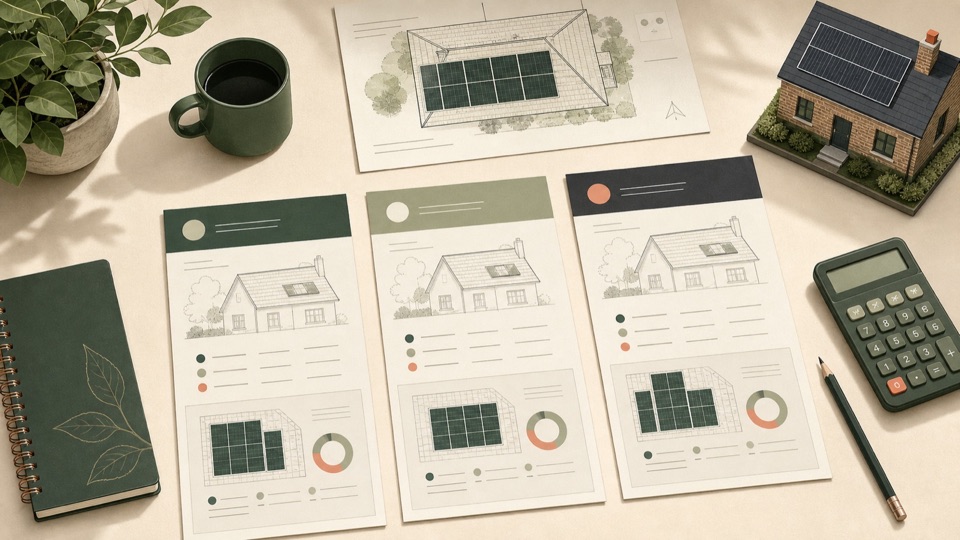 QUOTE CHECKLIST
Separate generation, self-use, export, battery value and exclusions.
Check a quote →No. Hearthline is an early planning tool. Confirm suitability, system design, costs, savings and grant eligibility with qualified professionals.
They are indicative scenarios. Your actual result depends on weather, occupancy, building fabric, system design, energy rates and how you use the home.
Your plan stays in this browser unless you deliberately choose “Save to My Hearthline”. Clearing this site’s browser data removes the local copy. An account is optional, and saved plans are not sent to installers.
Hearthline sells optional digital decision tools and may earn referral fees from clearly labelled paid partner links. Commercial relationships never change your planner ranking or estimate, and planner answers are not sent to partners. See how Hearthline makes money.
Design assumptions and included work vary. Comparing at least three like-for-like quotes helps expose exclusions and unrealistic performance claims.
Use it only as an early guide. Historic, listed, solid-wall and damp-affected homes need building-specific moisture and conservation advice.
Free, private and ready in about three minutes.