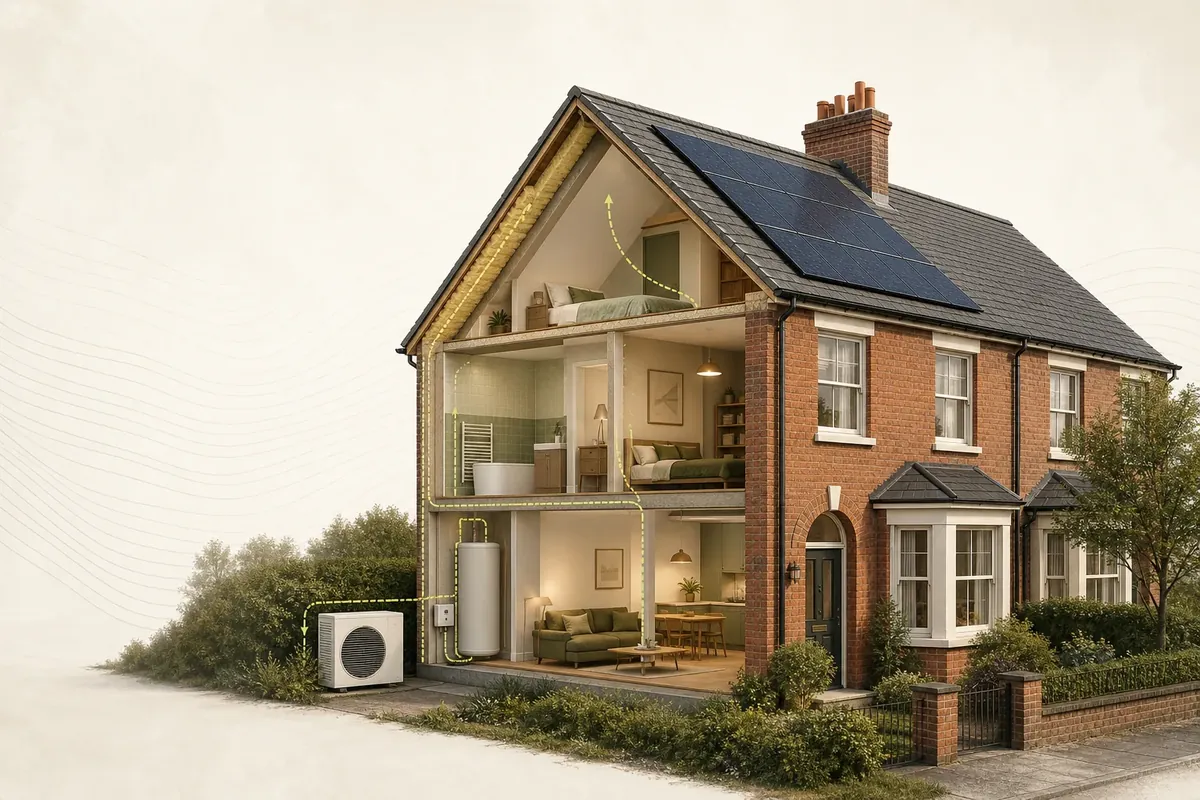
Turn your trigger events into an upgrade order.
Select what is already true. The tool coordinates work; it does not diagnose defects or specify a system.
Your selections stay on this page and are not sent to Hearthline or a partner.
What is the best order for home energy improvements?
- Fix urgent defects and moisture. Deal with leaks, unsafe electrics, failing roofs, damp causes and blocked ventilation before covering or electrifying them.
- Understand the home. Use bills, an EPC as a clue, comfort problems and—before a heat pump—a room-by-room heat-loss calculation.
- Do low-cost controls and draught work. Heating controls, pipe insulation and targeted draught-proofing can improve comfort without locking in a major design.
- Improve suitable fabric and ventilation together. Loft, wall and floor measures can reduce heat demand, but moisture risk and ventilation must be considered at the same time.
- Plan electrical generation and storage. Compare solar-only and solar-plus-battery cases using roof-specific generation, self-use and export assumptions.
- Design clean heat to the improved home. Confirm heat loss, flow temperature, emitters, hot water and electrical requirements before accepting a heat-pump quote.
The rule behind the order
Do reversible, diagnostic and protective work before expensive equipment. Sequence projects so an early decision does not oversize, damage or obstruct a later one.
Which improvement should move to the front?
| If this is true | Prioritise | Why |
|---|---|---|
| There is active damp, a leak or unsafe wiring | Repair and diagnose | Efficiency work must not conceal the cause or create a safety risk. |
| The loft is accessible and poorly insulated | Loft insulation | Often a relatively low-disruption fabric improvement. |
| The roof needs replacement soon | Coordinate roof and solar | Avoid paying twice for access and disturbing a new array. |
| The boiler has failed | Accelerate heat design | Use a proper heat-loss and emitter assessment; do not wait for a perfect deep retrofit. |
| You use substantial electricity in daylight | Assess solar earlier | Higher self-use can strengthen the financial case. |
| You are renovating rooms anyway | Bundle hidden fabric work | Marginal disruption and making-good costs may be lower. |
Does insulation always have to come before solar or a heat pump?
No. Insulation is not a blanket prerequisite for either technology. A sound roof with strong solar potential can justify solar now. A heat pump can work in older homes when the system is properly designed, although reducing heat loss may lower the required output and improve comfort. The correct choice depends on the building, the trigger event and the quality of the design.
Use our focused comparison: insulation, solar or heat pump first?
Worked example: a 1930s semi with a ten-year plan
Starting point: accessible loft with thin insulation, functioning gas boiler, south-west roof, some cold rooms and no active damp.
Likely sequence: controls and draught checks → loft insulation and ventilation check → solar quote comparison → room-by-room heat-loss calculation before the boiler reaches end of life → emitter upgrades and heat pump if the design works.
What could change it: a roof replacement would bring solar coordination forward; a boiler failure would bring heating design forward; damp would pause insulation until the cause is resolved.
What should you do before requesting quotes?
- Collect 12 months of electricity and heating use where possible.
- Note defects, cold rooms, condensation and planned renovations.
- Decide which outcomes matter: comfort, bills, carbon, resilience or all four.
- Compare the same scope and assumptions—not just headline prices.
Primary sources used
We use official or specialist primary guidance and state where a recommendation is Hearthline’s synthesis.