Heat pump vs gas running cost calculator
Enter the heat your home needs—not the gas shown on your bill. If you only know annual gas use, a first estimate is gas use × boiler efficiency, after removing any non-heating gas use you can identify.
Make every input visible.
At these inputs, the heat pump is estimated to cost about £24 less per year to run.
Defaults use Ofgem’s Great Britain average Direct Debit price-cap rates for 1 July–30 September 2026, including VAT. Actual regional, fixed and smart-tariff rates differ. Standing charges are excluded from both sides unless removing the gas connection changes what you pay.
Worked example: three seasonal-performance scenarios
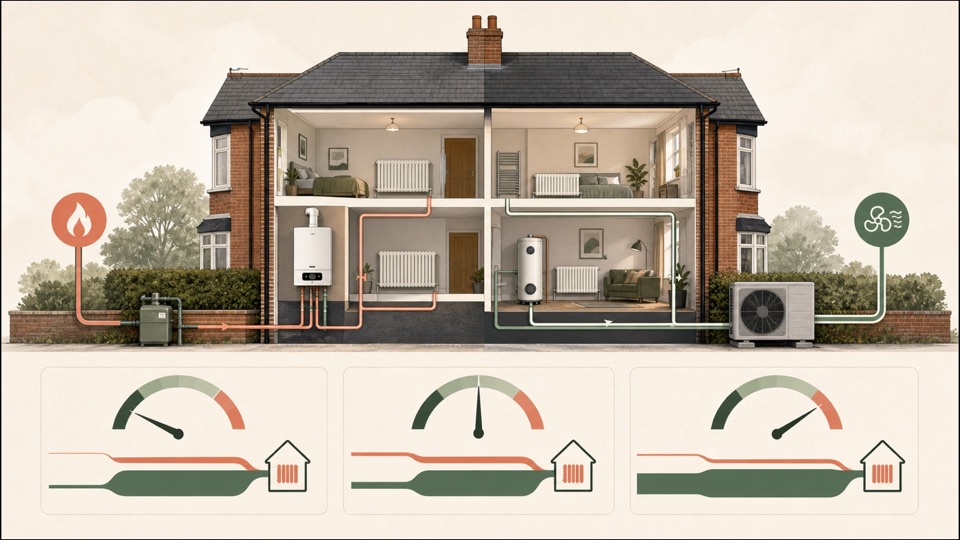
With the current calculator inputs, the gas estimate is £1,035. The heat-pump result changes sharply with real seasonal performance.
About £218 more than gas with these inputs.
About £24 less than gas with these inputs.
About £251 less than gas with these inputs.
What is the break-even calculation?
Heat-pump cost = useful heat ÷ SPF × electricity unit rate
Gas-boiler cost = useful heat ÷ boiler efficiency × gas unit rate
Break-even SPF = electricity rate × boiler efficiency ÷ gas rate
The heat demand cancels out of the break-even formula. That means your tariff ratio and the two systems’ real efficiencies decide which fuel costs less per unit of useful heat. Annual demand still decides how large the cash difference becomes.
Do not substitute a brochure COP
A single laboratory COP is not an annual efficiency. Ask the installer for the estimated seasonal performance factor under the proposed design, including the temperatures and system boundary used. MCS describes SPF as heat delivered per unit of electricity over a standard annual cycle.
Questions that change the answer
What SPF does a heat pump need to beat gas?
Using the default values above, about 3.03. Change either tariff or the boiler-efficiency assumption and the calculator updates the threshold immediately.
Should I include standing charges?
Electricity standing charge normally exists in both scenarios, so it does not change the comparison. Gas standing charge matters only if installing the heat pump lets you remove the gas connection completely. At the current average rate, that is about £106 a year.
Will a smart heat-pump tariff change the result?
Yes. Enter the expected weighted electricity price across all heat-pump consumption—not only the cheapest advertised period. A lower weighted rate reduces the break-even SPF.
Can this calculator predict my bill?
No. It isolates heating-energy cost so you can test a proposal. Weather, hot-water demand, controls, flow temperature, backup heat, tariffs, standing charges and the quality of design and commissioning all affect actual bills.
When should you stop estimating and ask for design evidence?
- Before buying, obtain a room-by-room heat-loss calculation and emitter schedule.
- Ask which seasonal performance figure the running-cost estimate uses and whether it includes pumps, immersion backup and hot water.
- Compare at least three installer proposals using the same tariffs and heat demand.
- Do not treat a grant, tariff or saving as guaranteed until eligibility and terms are confirmed.
Primary sources and assumptions
- Ofgem: price-cap unit rates and standing charges, 1 July–30 September 2026
- Energy Saving Trust: seasonal performance and gas-boiler efficiency context
- MCS 031: heat-pump pre-sale information and SPF definition
- GOV.UK: compare installers and heat-pump proposals
- Hearthline methodology, limits and review policy